

We observe the sacraments as follows:
We believe in the seven sacraments traditionally used in the church.
We believe that two sacraments (Dominical Sacraments) only are necessary for salvation: Baptism and Holy Communion. These two sacraments are ordained by Jesus Christ for all Christians. We call these Sacraments of Initiation.
The other five sacraments (Ecclesiastical Sacraments) are of benefit to many Christians at particular times in their lives. These are:
The Third Sacrament of Initiation, Confirmation
Sacraments of Healing: Holy Penance and Absolution and Holy Unction or Anointing of the Sick,
Sacraments of Vocation: Holy Orders and Holy Matrimony
The sacraments are an outward and visible sign of an inward and spiritual grace from God.
Holy Baptism
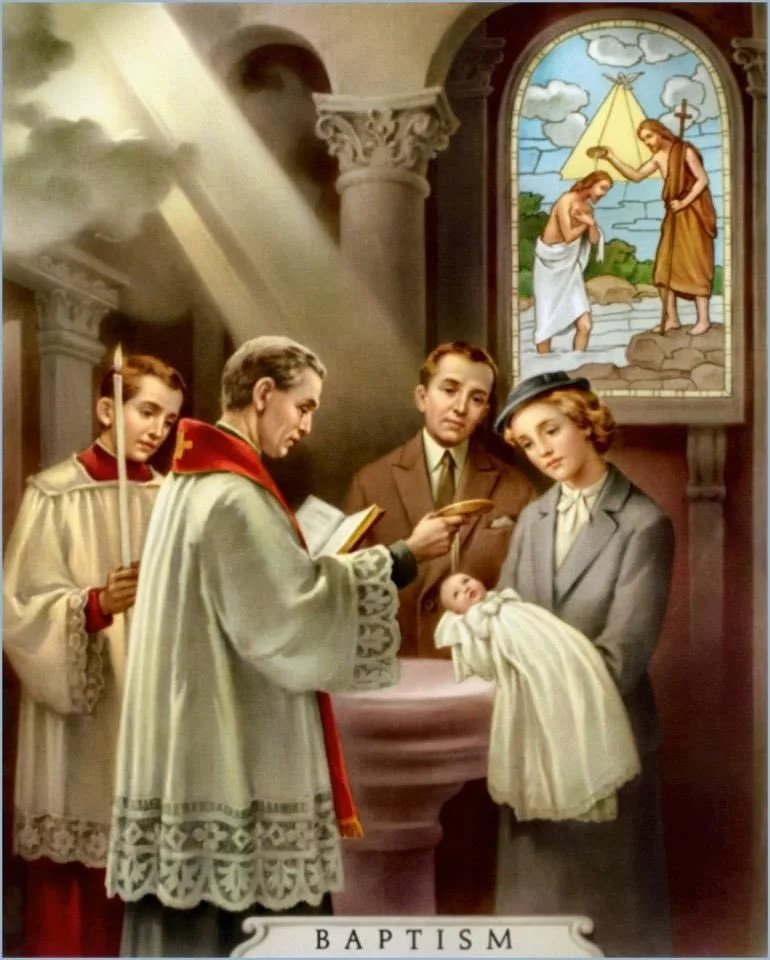

Baptism is the sacrament of new birth, the means by which a person is grafted into Christ’s Body, cleansed from sin, and made a member of the Church. It conveys real grace, not merely symbolic meaning. Through water and the Spirit, God initiates the believer into the covenant life promised in Scripture (John 3:5; Romans 6:3–4). Anglican tradition holds Baptism as “generally necessary to salvation,” while affirming God’s freedom beyond the sacrament. (See Additional Notes on Baptism)
SACRAMENTS OF HEALING
Holy Penance (Reconciliation)
Holy Matrimony


Penance is the sacrament by which sins committed after Baptism are absolved through confession, contrition, and priestly absolution. Anglican teaching holds that “all may, some should, none must” confess privately, yet Episcopal Catholics emphasize its sacramental grace and pastoral power. The priest declares God’s forgiveness, restoring the penitent to peace and communion (John 20:22–23).
Marriage is a sacramental union in which two individual people are joined by God into a lifelong covenant reflecting Christ’s love for His Church (Ephesians 5:32). The sacrament confers grace to live faithfully, grow in charity, and raise children in the knowledge and love of the Lord. While marriage is a civil contract, the Church blesses and elevates it into a holy vocation.
Holy Confirmation
SACRAMENTS OF INITIATION

Holy Eucharist
The Eucharist is the Church’s central act of worship and the sacrament of Christ’s Body and Blood. Episcopal Catholics affirm the Real Presence—that Christ is truly, mystically, and substantially present, though without defining the manner of that presence in scholastic terms. It is both a memorial and a participation in Christ’s once‑for‑all sacrifice (1 Corinthians 10:16; Hebrews 10:10). The Eucharist is the “chief means” by which grace is communicated to the faithful. (See Doctrinal Statement on the Holy Eucharist)

Confirmation strengthens and completes baptismal grace through the laying on of hands by a bishop. It imparts the sevenfold gifts of the Holy Ghost (Isaiah 11:2–3) and equips the believer for mature Christian discipleship. In the Episcopal Catholic tradition, Confirmation is not merely a rite of passage but a true sacramental strengthening—a personal Pentecost.
Holy Unction
(Anointing the Sick)
Unction is the sacrament of healing, grounded in James 5:14–15. Through anointing with oil and prayer, the Church seeks God’s grace for physical healing, spiritual strengthening, and forgiveness of sins. It is not reserved only for the dying; it is a sacrament of mercy, comfort, and restoration.
SACRAMENTS OF VOCATION
Holy Orders
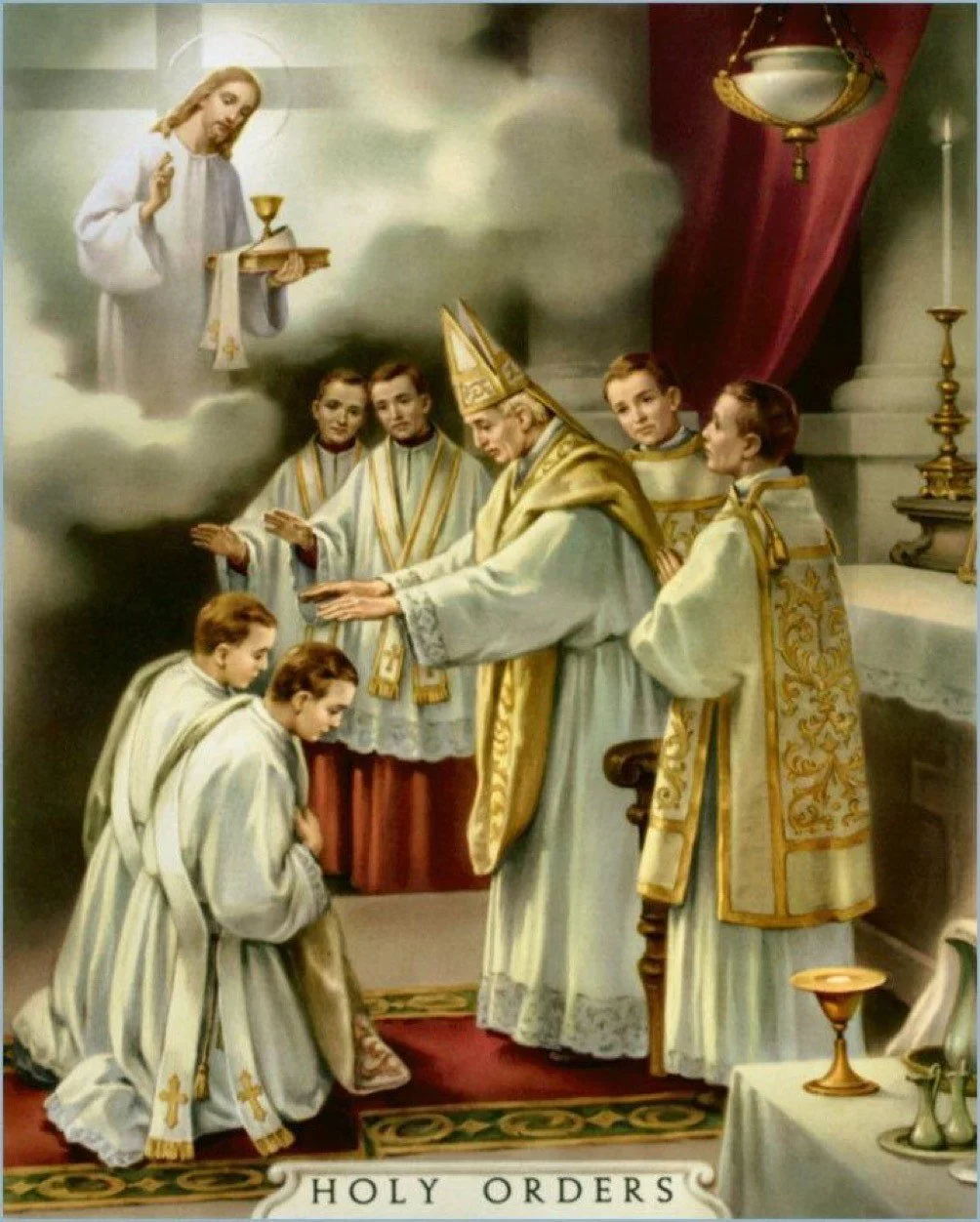
Holy Orders is the sacrament through which Christ continues His ministry in the Church. By the laying on of hands, the Holy Ghost sets apart bishops, priests, and deacons for sacred service. Episcopal Catholics affirm apostolic succession, seeing the episcopate as the guardian of sacramental grace and apostolic teaching. This sacrament imparts a permanent character and a divine commission to preach, teach, and administer the sacraments.

The steps below outline the process as practiced in this church.
Vocation
Vocation or a call to ordained life starts with a person hearing or sensing that God is calling him or her to seek a more intimate and deeper relationship with Him.
Discernment
Once a candidate has accepted that they have a vocation, a period, often referred to as Discernment, follows. This is a marked period of time in which the candidate evaluates several aspects of religious life under the guidance of a Spiritual Advisor. Should the candidate so choose, postulancy follows.
Postulancy
EVERY step is taken to ensure that a candidate is well paired with the community they intend to join. A Postulant is a person who has been accepted by the bishop as a candidate for ordination and is in the process of being trained.
Licensed Lay Reader
A licensed lay reader or lay minister is a person authorized by a bishop in the Anglican Communion to lead certain services of worship, to preach, and to carry out pastoral and teaching functions. They are formally trained and admitted to office, but they remain part of the laity, not of the clergy.
Transitional Diaconate
A category of clergy who are ordained deacon in preparation for being ordained priest. Clergy in the transitional diaconate tend to spend up to six months serving as deacons, after which ordination to the priesthood takes place following further review and inquiry.
Permanent Diaconate
A category of clergy who are ordained as deacons and intend to remain as deacons for the rest of their lives, without being further ordained to the priesthood. Such people recognize their vocation to be that of ministry and service, rather than presiding.
Priesthood
A person who is in the process of being ordained. Preparation is done, and the day of ordination has arrived. Before, during, and after the liturgy, the brand new, freshly robed priest is correctly called an “ordained”.